Education

The generative AI learning penalty in secondary school

Generative AI tools such as ChatGPT, Claude, and DeepSeek can help students solve problems, explain concepts, and polish their writing within seconds. This creates a productivity gain: students can complete assignments faster, with better scores. But in school, completing these tasks is not the goal; learning from them is. In a recent survey conducted by

The generative AI learning penalty in secondary school Read More »

How early academic rank shapes high school choices and admissions

Students with the same test score can have considerably different academic ranks depending on their school peers. Using data from the Mexico City metropolitan area, this column examines how differences in relative academic ranks in elementary school affect later cognitive and noncognitive outcomes. Among students with similar third-grade scores, those with higher academic ranks performed

How early academic rank shapes high school choices and admissions Read More »

The marriage squeeze: How the college gender gap is reshaping who marries whom

Today, 1.6 million more women than men are enrolled in four-year colleges and universities in the US. An emerging narrative holds that, as women increasingly outnumber men among college graduates, college-educated women will struggle to find suitable partners. In some high-income countries with more traditional gender norms, marriage rates for highly educated women have indeed

The marriage squeeze: How the college gender gap is reshaping who marries whom Read More »

Expanding opportunities: Economics PhD placement in the 21st century

Since 2010, a growing proportion of doctoral graduates have been taking jobs outside academia. This column explores where elite early-career economists work, using a dataset covering all PhD graduates from US economics programmes. The findings revealt that recent elite PhD graduates are more likely to leave academia, to take jobs outside the US, and to

Expanding opportunities: Economics PhD placement in the 21st century Read More »

Lifelong learning is becoming increasingly important in response to labour market transformations

As digital, environmental, and demographic transformations reshape labour markets, skills influence who benefits from these changes and who falls behind. Lifelong learning therefore becomes a policy priority to counterbalance such inequalities. Beyond narrower objectives like employability and productivity, lifelong learning can contribute to good working conditions, lasting innovation, inclusive societies, and active citizenship. Yet, recent

Lifelong learning is becoming increasingly important in response to labour market transformations Read More »

Increasing employment in pre-retirement years slows cognitive decline

Dementia affects an estimated 6 million Americans, and is the leading cause of neurological disability and the third leading cause of overall disability among older adults (over 65 years). Employment near retirement age appears to reduce the risk of cognitive decline, which is a key precursor to dementia (Coe et al. 2012, Bonsang and Perelman

Increasing employment in pre-retirement years slows cognitive decline Read More »

An Olympic opportunity for social housing policy: Lessons from the Athens 2004 Olympic Village

Soaring rents, long waiting lists, and mounting political anger are forcing governments across Europe to address gaps in social housing provision. This column examines whether new homes can also transform children’s futures, by looking at outcomes for families that were randomly selected to move into the Olympic Village in Athens after the Games had finished.

An Olympic opportunity for social housing policy: Lessons from the Athens 2004 Olympic Village Read More »

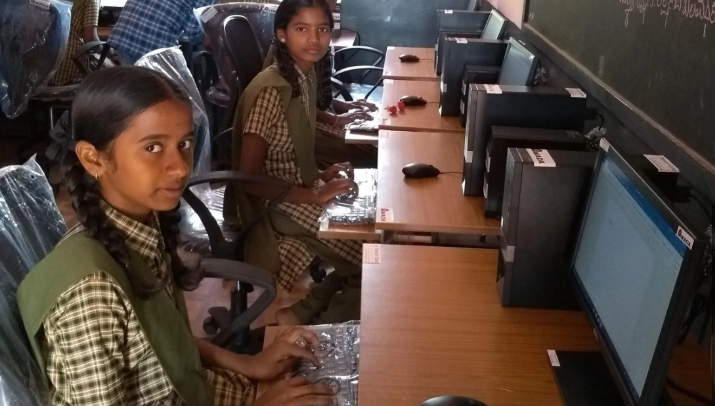
In-school supervised EdTech support produces massive learning gains: A Khan Academy field experiment in India

A fundamental challenge in education is that students are different. The average fifth-grade class contains students working at levels ranging from third grade to eighth grade, and this achievement gap only widens over time (Peters et al. 2017, Cascio and Staiger 2012, Nielsen 2023). The problem is particularly acute in developing countries. Hanushek and Woessmann

In-school supervised EdTech support produces massive learning gains: A Khan Academy field experiment in India Read More »

How to boost learning in low-income countries: Raising revenues or cutting costs?

Imagine being asked to build a school on a budget that barely buys a stack of bricks, but no cement, windows or roofing materials. That is what education funding looks like in many low-income countries. With an average annual spending of just $55 per child (PPP$172), spending on education in LICs is in stark contrast even

How to boost learning in low-income countries: Raising revenues or cutting costs? Read More »