



Is the decline in news consumption among young people inevitable? This article reports on a large-scale randomized controlled trial conducted in France to investigate whether free access to a major daily newspaper and media literacy training for teachers can boost print media reading among high school students. Free access to Le Monde led to a sustained increase in news consumption and a significant improvement in news literacy, particularly among students from disadvantaged schools, suggesting that access to quality information and media literacy can help reduce socioeconomic inequalities in news knowledge.
In 2024, the Columbia Journalism Review published an article titled “They Offered Local News for Free. Virtually No One Wanted It” (Lind 2024). This article reviewed a randomized controlled trial conducted in Pennsylvania to encourage news consumption. While 2,529 people were offered a free subscription to their local newspaper, only 44 accepted—less than 2% (Hopkins and Gorton 2024). Does this mean that the collapse of journalism, particularly at the local level (Cagé et al. 2021), simply reflects the fact that people are no longer interested in the news, even when it is offered for free, and that this development is ultimately inevitable?
In a recent article (Briole et al. 2026), we demonstrate, on the contrary, that it is possible to encourage citizens—including young people—to read newspapers. More specifically, during the 2024–2025 school year in France, we conducted a large-scale randomized controlled trial to examine the impact of two complementary interventions aimed at promoting media literacy and the consumption of quality information among high school students. The study involved 243 high schools and 379 classes, totaling 9,628 students in grades 10, 11, and 12. The participating high schools (both public and private, general, technological, and vocational) are representative of all French high schools, particularly with regard to the socioeconomic and cultural backgrounds of the families of students enrolled in these institutions.
Unlike the approaches commonly used in most studies on news consumption, we recruited high schools rather than individual students. This means there is no student-level selection (for example, we do not recruit a subset of students interested in free access to news or students already online). Furthermore, we do not pay participants. This ensures that our sample is free from selection bias and is representative of all French high school students.
The schools were randomly assigned to one of four groups: (i) students receive free digital access to the newspaper Le Monde (the “free access to media” group), (ii) teachers receive training to implement media education modules in the classroom (the “media education” group), (iii) students and teachers receive both interventions (i.e., free access and media education; the “combined treatment” group), and (iv) the control group (no intervention).
New insights into news consumption among young people
To begin, we present descriptive statistics on news consumption and interest among the more than 9,600 students who responded to the survey before the intervention began. Only 7% of students reported never keeping themselves informed about political, economic, and social news in France and/or abroad. Conversely, 36% indicated doing so often, and 9% very often. Furthermore, among the news topics that interest them most, 50% of students cited politics and 47% international news (Figure 1). Young people thus appear to be interested in current events, including serious topics.
Figure 1 Descriptive data on news consumption among young people: interest in news by topic
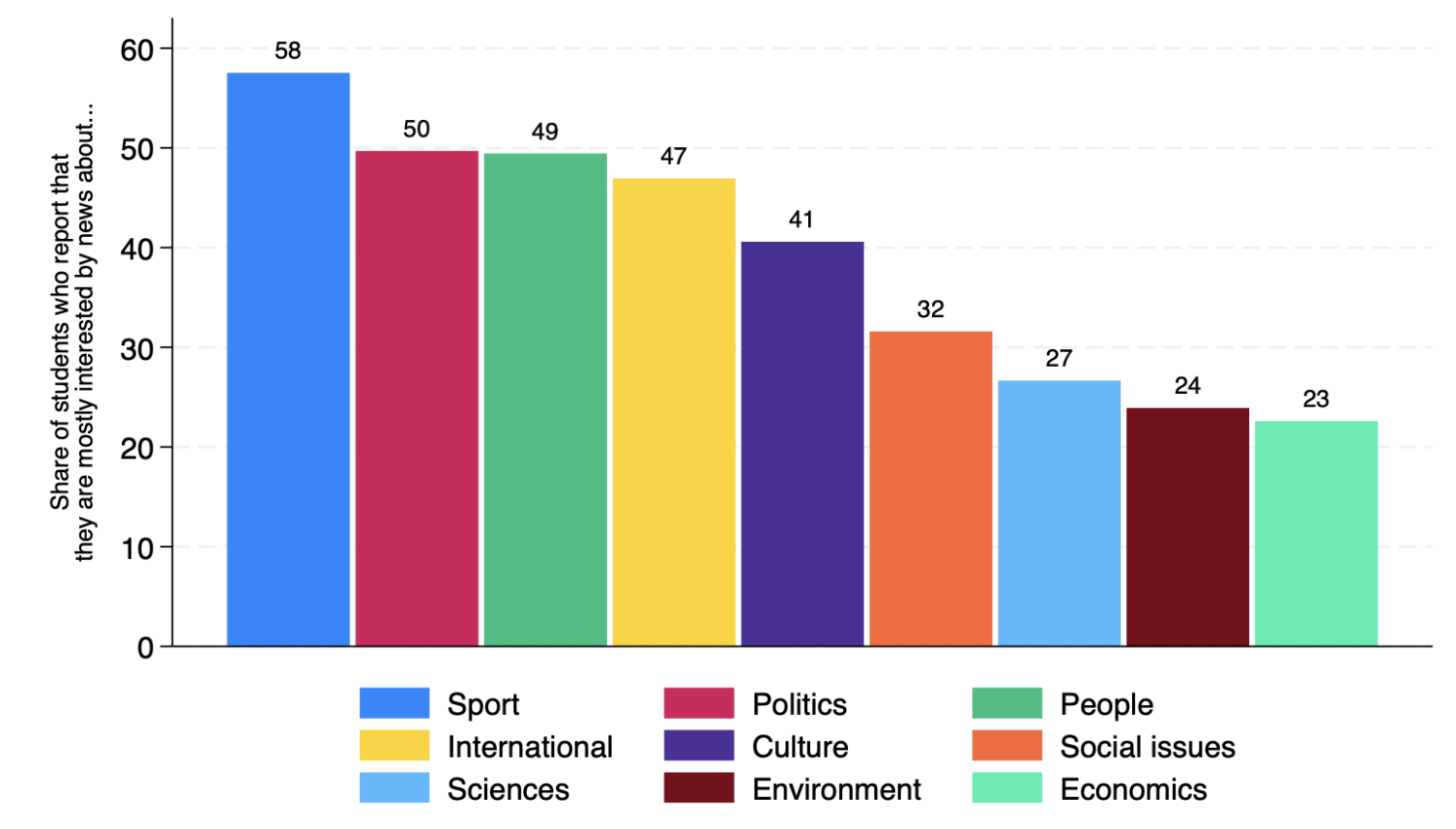
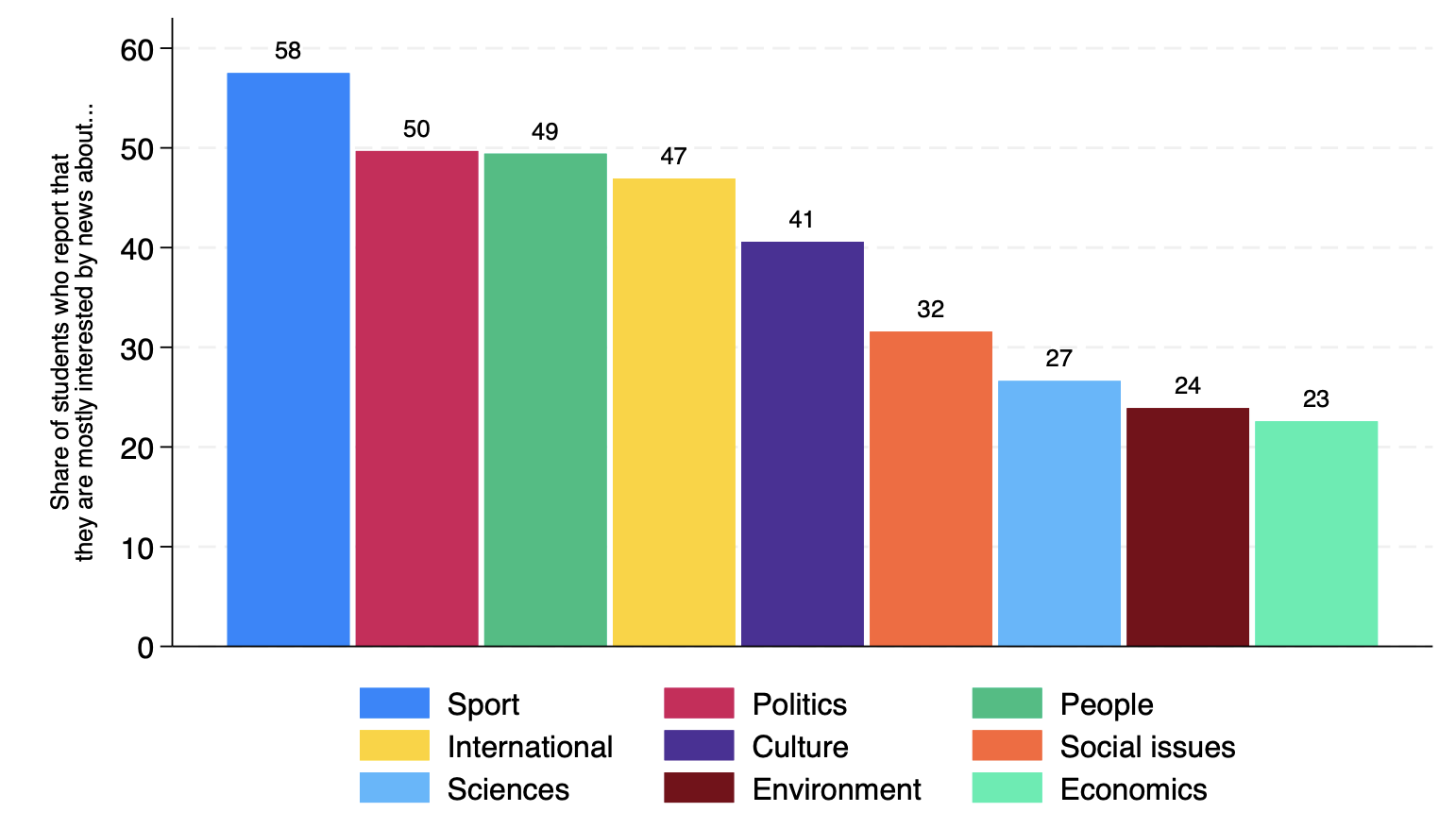
Notes : This graph presents the responses to the question: “What type(s) of news interest you most?” from the baseline survey conducted in October 2024. One observation corresponds to a student who responded to both the baseline and final surveys (N = 7,091).
Source : Briole et al. (2026).
However, traditional media consumption—and in particular newspaper consumption—was relatively low among high school students at the start of the experiment. While 81% of students reported using social media as a source of information in the past seven days and 65% indicated watching television, only 19% stated they had consulted newspapers (online or in print). Nevertheless, the students demonstrated a very good understanding of the media landscape, and in particular of the newspaper Le Monde.
Consistent with existing literature that reports significant inequalities in access to information (Angelucci and Prat 2024), there is heterogeneity in news consumption habits based on socioeconomic status (SES). While 52% of students from a privileged socioeconomic background (SES) report never (6%) or rarely (46%) following the news, 64% of students from a disadvantaged SES do (12% of whom report never following the news). Furthermore, students from a low socioeconomic background (SES) are less likely to use all types of media—including social networks—as a source of information, reflecting their generally lower news consumption.
A very significant reliance on free access to newspapers
Of the 2,494 students in the “free access to media” intervention groups (1,351 in the “free access to media” group and 1,143 in the combined intervention group), 1,753 activated their subscription to Le Monde , representing a participation rate of 70.3% (Figure 2). Furthermore, among the 1,753 activated subscriptions, 87.7% of the students visited Le Monde’s website at least ten times, and 63.8% at least fifty times.
Figure 2 Student news consumption: subscription rate
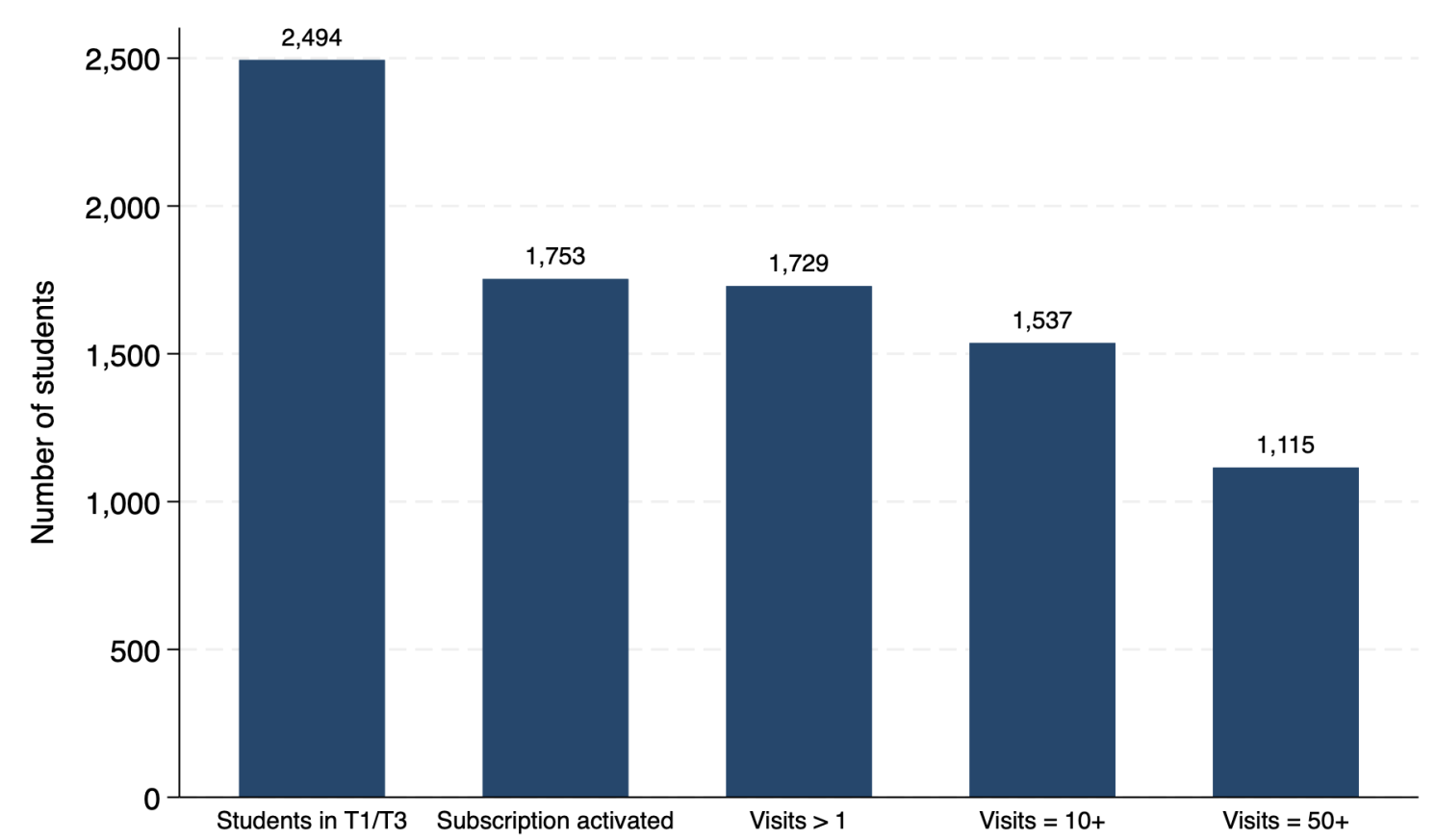
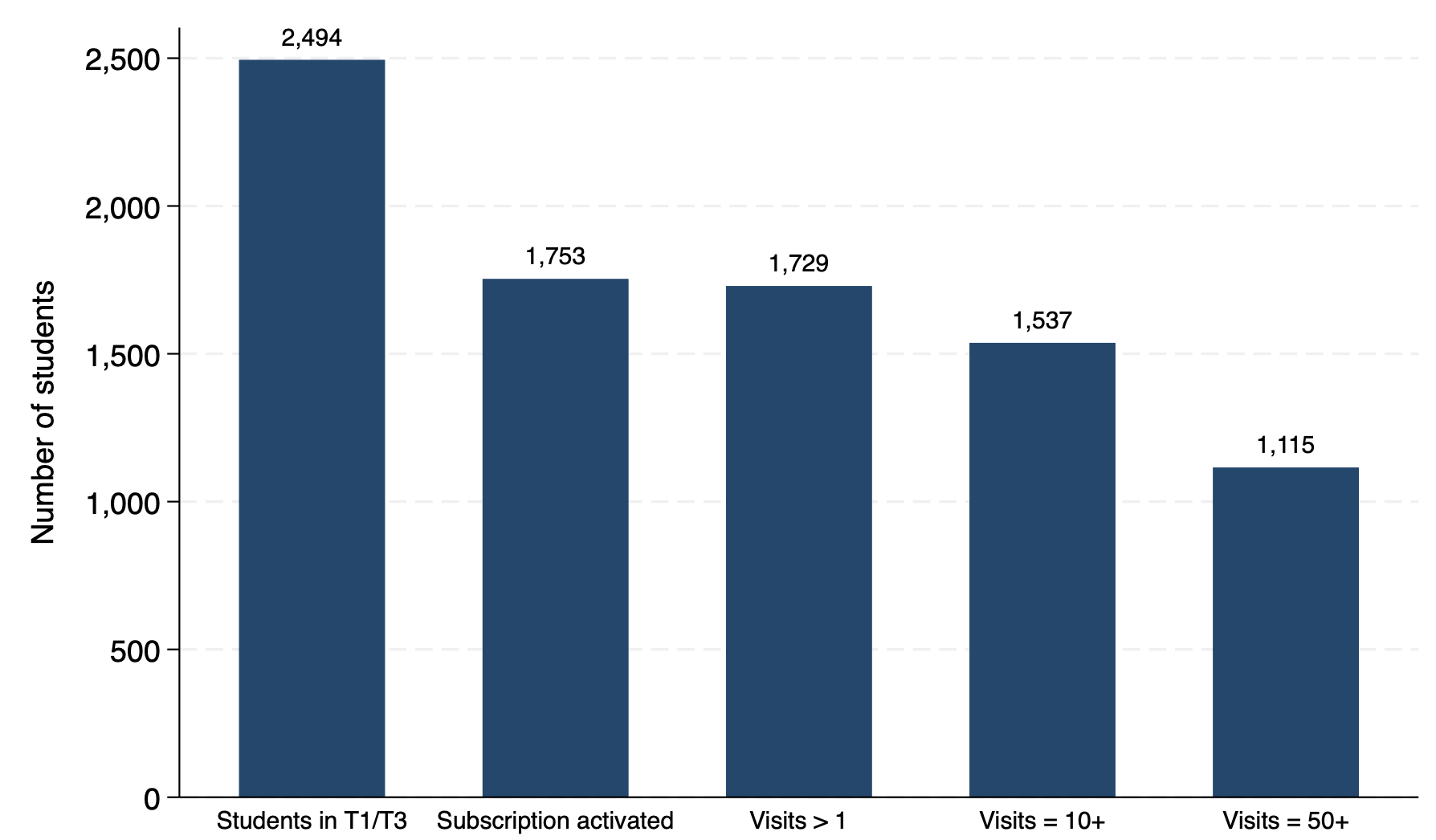
Notes : The graph represents the total number of students in the groups receiving a free journal subscription (the “free access” group [T1] and the combined treatment group [T3]), as well as, among them, the number of students who activated their subscription and those who made more than 1, 10, or 50 visits to the website.
Source : Briole et al. (2026).
News consumption among students with only free media access and the combined intervention is not entirely determined by classroom activities: 19% of visits occurred on weekends, while 22% took place between 4 p.m. and 8 p.m., and 15% between 8 p.m. and midnight. However, analysis of the specific articles read by students reveals a strong similarity within the same class: two students in the same class are 8.34 times more likely to read the same news content than two students from different classes.<sup> 1</sup> This suggests that using Le Monde in the context of school activities, such as homework, plays a significant role in stimulating news consumption.
News consumption and news demand
The very strong enthusiasm for the free subscription is resulting in persistent and significant increases in news consumption and demand for future news.
First, both free access to media alone and the combined approach show significant positive effects on newspaper consumption. The proportion of students citing a newspaper among their top five news sources more than doubles, rising from around 20% to over 40%. The proportion of students reporting having consulted at least one newspaper from a predefined set of national dailies and weeklies in the past seven days increases from 47% to 64–66% (a relative increase of 35–40%). While media literacy alone has no effect on newspaper consumption, it somewhat reinforces the positive effect of free access to media, with the effect of the combined approach being slightly greater than that of free access to media alone.
The increase in newspaper consumption is entirely due to reading our partner newspaper, Le Monde (Figure 3). The effects are economically significant: we observed a 21 percentage point increase (group with free media access) and a 28 percentage point increase (combined treatment) in the proportion of students citing Le Monde among their five main news sources, which corresponds to 115% and 150%, respectively, of the average for the control group. Furthermore, we observed no effect when Le Monde was excluded and all other newspapers were considered.
Figure 3 Effects of processing: use of newspapers among the main sources of information
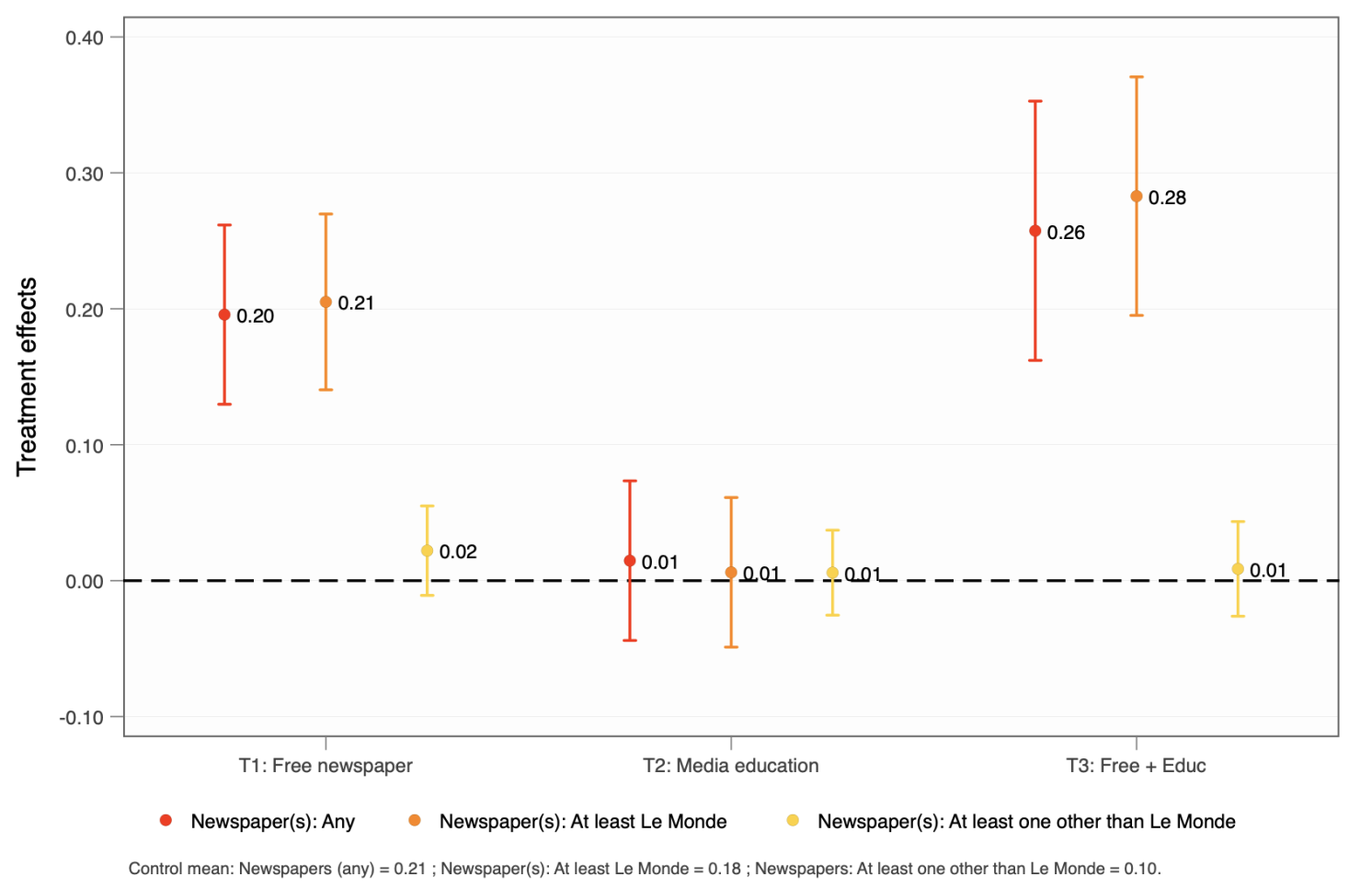
Notes : The graph presents the effects of treatment on (i) an indicator variable equal to one if the respondent cites a newspaper among their five main sources of information, and zero otherwise (“Newspaper(s): Any”), (ii) an indicator variable equal to one if the respondent cites Le Monde among their five main sources of information, and zero otherwise (“Newspaper(s): At least Le Monde ”), and (iii) an indicator variable equal to one if the respondent cites a newspaper other than Le Monde among their five main sources of information, and zero otherwise (“Newspaper(s): At least one other than Le Monde ”). T1: group receiving only free access to media; T2: group receiving only media literacy training; T3: group receiving a combined treatment.
Source : Briole et al. (2026).
We also observed a substitution effect between using newspapers as the primary news source and using social media. All three treatments reduced the likelihood of citing social media among the top five news sources by 5 to 8 percentage points, which corresponds to 10%–15% of the average for the control group. Interestingly, however, we did not observe a decrease in the use of other news media, suggesting that news sources tend to complement rather than replace one another. Furthermore, we observed an increase in the diversity of news sources used by students, as well as a greater interest in consuming news from a variety of sources.
These effects translate into sustained engagement with news consumption beyond the intervention period. Nearly 20% of students in both the group receiving free media access and the combined treatment group who visited Le Monde ‘s website during the experiment returned to it between November 1 and December 31, 2025, several months after the intervention ended. Similarly, a follow-up survey conducted in April-May 2026 showed a positive effect of the combined treatment on the likelihood of subscribing to Le Monde one year after the experiment ended, with an 8 percentage point increase (approximately 66% higher than the average for the control group). More generally, the effects on news consumption habits persist over the long term, indicating the formation of lasting habits.
Knowledge of current events and reduction of information inequalities
Does this increase in news consumption translate into an enrichment of knowledge? We have developed a news knowledge index that combines three complementary dimensions of factual knowledge about public affairs: discernment (ability to identify correct information concerning recent events), political knowledge, and economic knowledge.
The overall effect on knowledge is not significant, but we observed a strong increase in current affairs knowledge among students enrolled in disadvantaged high schools (i.e., schools with a high proportion of students from low socioeconomic backgrounds). Among students in low socioeconomic schools, free access to newspapers alone increased current affairs knowledge by 0.20 standard deviations compared to the control group, while the combined treatment increased it by 0.31 standard deviations. Media literacy alone also had a positive effect of 0.09 standard deviations. In contrast, no statistically significant effect was observed among students attending schools with high socioeconomic status.
These results support the hypothesis that information constraints disproportionately affect disadvantaged students. Consequently, access to quality information and media literacy appears to help reduce socioeconomic inequalities in news literacy. To assess the magnitude of this effect, we compare these gains to the baseline knowledge gap in the study. In the control group, students attending schools in low socioeconomic status scored 0.45 standard deviations lower on the news literacy index than students attending schools in high socioeconomic status. Given the lack of treatment effects in the latter, the estimated gains, between 0.20 and 0.31 standard deviations for students from disadvantaged socioeconomic backgrounds, imply that free access to a newspaper – alone or in association with media education – reduces this gap in baseline knowledge by about 45 to 70%, while media education alone reduces it by 21% (Figure 4).
Figure 4 Heterogeneous effects of treatment: knowledge of current events according to socio-economic status (IPS quartiles)
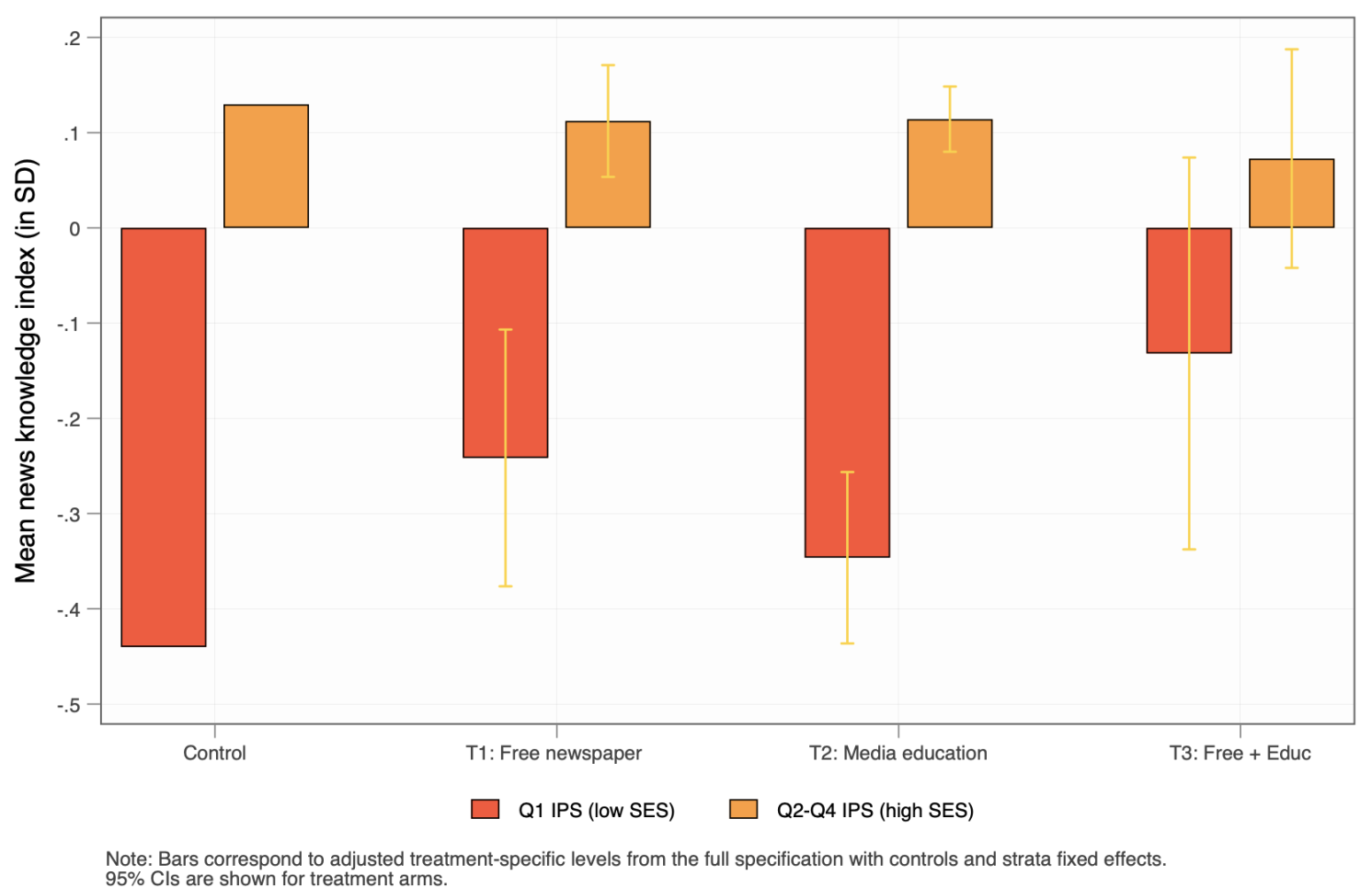
Notes : The figure presents the effects of treatment on a news awareness index separately for schools from disadvantaged socioeconomic backgrounds (first quartile of the Social Position Index, or SPI) and schools from advantaged socioeconomic backgrounds (second to fourth quartile of the SPI).
Source : Briole et al. (2026).
Media literacy skills
Finally, we construct a media literacy skills index combining three observed outcomes: (i) students’ ability to cite accurate information sources; (ii) observed use of a fact-checking tool (Cagé et al. 2025); and (iii) a social media sharing task. We find positive effects of all three treatments on media literacy skills, ranging from 0.08 to 0.26 standard deviations, although the effect of media literacy alone is not statistically significant.
These improvements are primarily due to gains in source literacy: students who participated in the interventions were more likely to identify accurate sources of information, while we also observed positive, but statistically insignificant, effects on the use of the fact-checking tool. Remarkably, the gains in source literacy persisted a year after the intervention ended, suggesting that the interventions fostered the development of lasting habits of paying attention to the origin and credibility of information.
Recent experimental data highlight that teacher quality is a key determinant of the effectiveness of civic education interventions (Briole et al. 2025). Drawing on teachers’ prior experience in media and information literacy, we show that the effects are more pronounced among students whose teachers have a high level of experience in this area. This suggests that effective media literacy teaching relies on pedagogical skills that are acquired gradually through repeated training and classroom practice, rather than through one-off professional development activities. From a policy perspective, this underscores the importance of providing teachers with sustained opportunities to develop and renew their media and information literacy skills over time.
Political implications
Overall, the results of our study show that both free access to quality information and media literacy can improve young people’s relationship with information. Despite the persistence of online habits, news consumption patterns can be changed. Free access to newspapers leads to a significant and sustained increase in news consumption, while both interventions strengthen future demand for news and media literacy skills and reduce information inequalities. In several respects, the combination of free access and media literacy produces the most pronounced effects, suggesting that these interventions are complementary rather than interchangeable.
Furthermore, both interventions are highly scalable. Providing students with free access to online news requires minimal additional infrastructure and can be implemented at a relatively low cost. A substantial portion of these costs would not be a net loss, but rather a transfer to producers of high-quality information (Cagé and Huet 2021, Cagé 2015). The scalability of this approach relies on the partnership model between secondary schools and media outlets. Thanks to the school context, which involves both teacher support and peer influence, this policy directly overcomes the behavioral barriers that typically hinder young people’s adoption of digital information.
Finally, such policies do not come at the expense of well-being. Indeed, our interventions do not impact anxiety related to current events or the overall well-being of the students involved. In other words, our program has excellent potential for future development.
Source: cepr.org
