


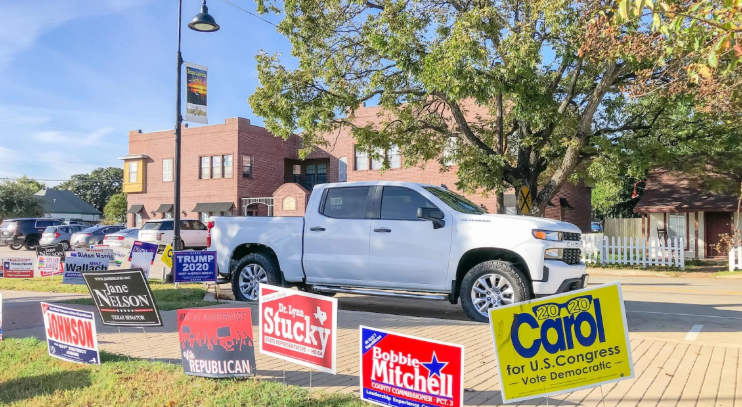
Political polarisation in the US has increased dramatically in recent decades, both among political elites (Gentzkow et al. 2019) and citizens (Fiorina and Abrams 2008). Among twelve OECD countries, the US ranks top in affective hostility between partisans (Boxell et al. 2024). Scholars and commentators increasingly worry about the consequences of polarisation for democracy (Rodden et al. 2020, Wright et al. 2020) and seek to understand its causes.
A common explanation points to geography. If supporters of different parties live apart from each other, the limited everyday contact between them may reinforce stereotypes and distrust. In turn, polarisation can influence where people choose to live, creating a self-reinforcing cycle. Sorting on partisanship may be compounded by sorting on correlated demographic characteristics. “My wife and I didn’t intend to move into a community filled with Democrats, but that’s what we did, effortlessly and without a trace of understanding,” wrote journalist Bill Bishop in The Big Sort. His observation captured a growing fear that political divisions are spreading far beyond the ‘red versus blue’ state divide, reaching cities and even neighbourhoods.
However, until recently, there was little conclusive evidence that partisan segregation has been increasing, and if so, why. Using a snapshot of individual-level data, recent research by Brown and Enos (2021) shows that partisan segregation is high, even within small neighbourhoods. Yet we lack a clear picture of how this divide has been changing over time and which factors explain it, since most existing studies rely on aggregate data (e.g. Sussell 2013, Rodden 2019, Kaplan et al. 2022). Academics (McDonald 2011, Lang and Pearson-Merkowitz 2015, Gimpel and Hui 2015, McCartney et al. 2024, Rodon et al. 2026) and the media (Kaysen and Singer 2024, Ellwood 2024) often focus on one specific factor: residential mobility. However, other forces such as generational turnover and individual changes in registration or party affiliation may also play a role.
In a new paper (Brown et al. 2025), we provide a systematic analysis of the sources and extent of partisan segregation at every geographic level, from congressional districts to neighbourhoods. We use two unique datasets that track the residential address history of every registered voter in the US as well as their party affiliation, in states recording that information on voter files. The data vendor Catalist follows 143 million voters from 2008 to 2018 across 29 states and Washington, DC, and includes data on voter registration status, party affiliation, age, gender, and ethnicity, with geographic precision down to the block level. TargetSmart offers comparable data from 2012 to 2020, including exact residential addresses. We obtain very consistent results using these two datasets.
A steady rise in partisan segregation
We find that partisan segregation has been rising since 2008, both across and within geographic units. Strikingly, this holds true for any two consecutive elections. Of 1,373 counties in states with partisan registration, 66%, covering 61% of registrants, contributed to rising cross-county segregation between 2008 and 2018.
Our analysis uses two metrics. The Democratic share, which corresponds to the proportion of registered Democrats among Democrats and Republicans, captures segregation across geographic areas. The two-party index of Dissimilarity measures how unevenly Democrats and Republicans are distributed within an area. At the county level, the standard deviation of the Democratic share rose by 7.7% between 2008 and 2018. This means that an additional 6.0 million voters lived in highly segregated counties by 2018 (Figure 1). Over the same period, the index of Dissimilarity increased by 9.6%, indicating that within counties, voters with different party affiliations are increasingly sorted into different neighbourhoods. Notably, partisan segregation is rising not only at the county level but also when we consider census blocks, block groups, tracts, and even congressional districts.
Figure 1 Partisan segregation is rising
Between 2008 and 2018, both the Democratic share (top panel) and the index of Dissimilarity (bottom panel) rose, showing that counties and neighbourhoods alike have become more politically homogeneous


Note: The Democratic share is the proportion of Democrats among registered partisans (Democrats and Republicans). It tracks segregation across counties. The index of Dissimilarity captures sorting within counties. The vertical lines correspond to the 10th and 90th percentiles of the distribution for the Democratic share, and to the median for the index of Dissimilarity.
Source: Brown et al. (2025).
Mapping the geography of the divide
Partisan segregation is rising across the US, but not all areas are contributing to this trend. Therefore, we classify geographic units using a two-by-two classification, based on whether units become more Democratic (or Republican) over time and whether they contribute to increasing (or decreasing) the variance of the Democratic vote share.
Geographically, Democratic-leaning counties that fuel segregation are concentrated in large coastal metropolitan areas and most were already Democratic strongholds in 2008. Republican-leaning counties that drive segregation are more rural and were not all Republican at the outset.
The demographic divide between areas contributing to partisan segregation and areas contrasting that trend is similarly stark. Democratic-leaning counties that increase segregation are denser, more racially diverse, and better educated than other Democratic-leaning areas. Republican-leaning counties that drive segregation are more rural, poorer, less racially diverse, and less educated than other Republican areas.
Taken together, these patterns reveal a growing alignment of demographics, geography, and partisanship. The result is an increasingly divided political map.
Figure 2 A clustered but widespread rise in partisan segregation
In states recording partisan affiliation, most counties fuel rising partisan segregation, with Democrats gaining strength on the urban coasts and Republicans in the rural heartland, Florida, and Maine.


Source: Brown et al. (2025).
Drivers of geographic partisan segregation
We then identify the main forces responsible for the rise in geographic partisan segregation. Residential mobility – whether the result of a preference for living near co-partisans or the byproduct of sorting by occupation, income, or education – mostly concerns white voters and explains only a small share of the overall trend (around 13% to 22% of the county-level change in the Democratic share). Our evidence thus confirms an observation also made by Mummolo and Nall (2017) that Democrats and Republicans are generally not relocating to places with like-minded individuals. These findings are robust to a voter misclassification exercise based on Current Population Survey migration benchmarks. Allowing for plausible upper-bound rates of mover misclassification does not materially increase the relatively modest role of residential mobility.
The main drivers of changes in Democratic share differ sharply across types of areas. In Democratic-leaning places, compositional change dominates, driven by generational turnover and by the entry and exit of adults from the electorate. Generational turnover favouring the Democrats is fuelled primarily by young, non-white, and female voters coming of age. By contrast, party switching among former Democratic registrants is the key driver of increasing partisan segregation in Republican-leaning areas, with many older white voters shifting to the Republican Party.
Figure 3 Democratic vs Republican areas: Different drivers of rising partisan segregation
In Democratic-leaning counties (top panel), changes in the electorate’s composition drive rising homogeneity, while in Republican counties (bottom panel), party switching by Democrats fuels segregation.


Source: Brown et al. (2025).
Overall, the increase in partisan segregation is concentrated among white voters, while it has declined among ethnic minorities. In addition, segregation is rising fastest among younger voters, raising concerns that a generation growing up in a politically segregated environment may remain so and that the existing partisan divide may self-perpetuate and continue to increase.
Source: cepr.org
