


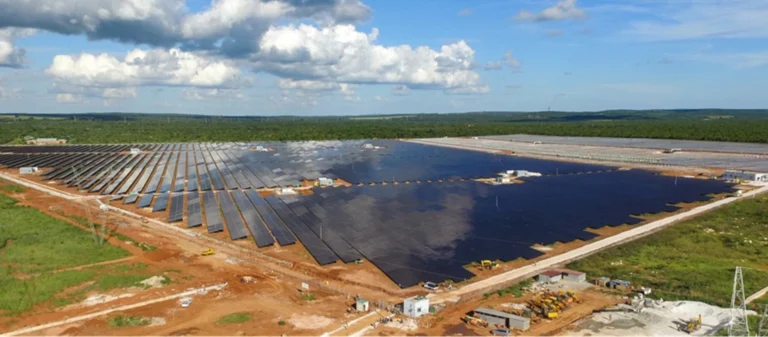
Green is the new buzzword, but what does greening industry and the financial sector mean in practice? In our recent report, “Zambia: Financing a Green Future” we seek to start answering these questions for Zambia.
For Zambia, going green means a combination of adapting regulations and financial supervision frameworks to adequately measure and mitigate climate risks and supporting the market (financial sector institutions) capacity to develop and target financial products and services. For industries (the real sector), it means the capacity (technical and financial) to innovate and adopt new technologies and for innovative new entrants to be facilitated through business environment reforms. As economic diversification grows in Zambia, there is an opportunity to build green from the ground up while retrofitting more established industries.
The increasing frequency of extreme climate events that Zambia experiences leads to a vicious cycle of crop failures, leading to food insecurity, leading to rollback in socioeconomic gains, and finally, leading to worsening economic conditions. This also creates a situation of rising fiscal pressure for the government which then must allocate limited resources or take on additional debt to address basic needs.
Meanwhile, FX earning sectors like mining are vulnerable to emerging regulations among top markets which are increasingly seeking greener supply chains to source commodities. With more than 60% of Zambia’s exports concentrated in copper, transition risks (i.e., risks stemming from a shift towards low-carbon production) are particularly acute for Zambia, given the increasing focus on green minerals globally. Similarly, there is increasing pressure on agribusinesses and manufacturing to adopt low-carbon footprint technologies and develop more sustainable business models.
On the regulatory side, Zambia is making great strides in advancing its green economy agenda, especially in the financial sector. A tripartite group composed of Bank of Zambia (BoZ), Pensions and Insurance Authority (PIA), and Securities and Exchange Commission (SEC) is collaborating to develop a comprehensive and robust regulatory framework. The BoZ, with support from the World Bank, issued in October 2023 the first Green Loans Guidelines regulating the issuance and reporting of green loans. The SEC issued its green bond guidelines in 2019. A green growth strategy is underway, led by the Ministry of Green Economy and Environment.
But much work remains to be done, particularly in market development. A combination of business environment reforms to ease business entry and operations to open up space for innovative new entrants with greening financial supervision, and investing in greening value chains through facilitating tech adoption, is needed. Stakeholders identified the mining, agriculture, and light manufacturing sectors as key areas where there is demand for green investments. However, the supply of finance currently does not match the demand of the private sector.
While the financial sector recognizes emerging opportunities in green finance, the institutional capacities needed to identify green finance opportunities, price them appropriately, and scale up the supply of finance, are lacking. This also ties into the broader challenges of access to finance for the private sector in Zambia.
The private sector currently lacks the capacity to identify the specific scalable, cost-effective technologies needed to go green, where to source these technologies from, and how to deploy them cost-effectively and at scale. Relatedly, the national quality infrastructure, which facilitates quality assurance and standardization of goods produced in the country, is also underdeveloped. As a result, the adoption of new, green technologies and processes is quite slow. In addition, global sustainability regulations like the EU Deforestation Regulation (EUDR) and Corporate Sustainability Due Diligence Directive (CSDDD) are also placing additional pressure on industries to adopt green technologies and climate-smart processes. Copper has also been placed on the list of critical materials by the U.S. Department of Energy, which is likely to lead to additional sustainability requirements for raw copper imports from Zambia. This is a strong incentive for the private sector, especially export-oriented industries, to undertake green investments.
Even as Zambia grapples with the impact of extreme climate events and large markets like the U.S. and EU seek green imports and commodities, there is an opportunity to undertake adaptation activities in key sectors. With regulators, financial institutions, and industry collaborating, and a holistic green agenda, Zambia will be better positioned to grow market share of green exports into key markets.
source : world bank blogs
